|
<NOTE>
Root Eating by Wild Chimpanzees (Pan troglodytes) in the Kalinzu Forest, Uganda: Possible Medicinal Plant Use
Natsumi Aruga, Hodaka Matsuo, Takeshi Furuichi & Chie Hashimoto
Primate Research Institute, Kyoto University, Japan 
INTRODUCTION Although wild chimpanzees mainly feed on ripe fruit and other food items found above the ground (Wrangham 1977; Nishida & Uehara 1983; Goodall 1986), some studies have reported that chimpanzees feed on roots or tubers (Nishida & Uehara 1983; Kortlandt & Holzhaus 1987; McGrew et al. 1988; Newton-Fisher 1999; Lanjouw 2002; Morgan & Sanz 2006; Hernandez-Aguilar et al. 2007; Hockings et al. 2010; Watts et al. 2012). Among the chimpanzees observed eating roots or tubers, most were observed feeding on underground storage organs (USOs), and such behavior was mainly observed in drier environments (Kortlandt & Holzhaus 1987; McGrew et al. 1988; Lanjouw 2002; Hernandez-Aguilar et al. 2007). Only a few studies have reported feeding on roots other than USOs. M group chimpanzees of the Mahale Mountains National Park, Tanzania, bite off and chew woody roots emerging from the ground (Nishida & Uehara 1983; Itoh & Nakamura in press).Chimpanzees of the Ngogo community in the Kibale National Park, Uganda, chew wood from the roots of Neoboutonia macrocalyx and discard the wadge after chewing on them (Watts et al. 2012). In this study, we report on chimpanzees feeding on wood from the roots in the Kalinzu Forest, Uganda, and discuss some possible roles of this behavior. METHODS We observed the M group of chimpanzees living in the Kalinzu Forest Reserve, located in western Uganda (0°17′N, 30°07′E ) (Howard 1991; Hashimoto et al. 2001; Hashimoto & Furuichi 2006). M group has been under observation since 1997 and is habituated to the extent that during the current study period chimpanzees could be observed at a distance of less than 10 m on the ground. Complete identification of central individuals was achieved in 2003. During the current study period, M group included 15 adult males, 9 adolescent males, 25 adult females, 16 adolescent females, and 36 immature individuals. For individuals other than those who had been observed since birth, we estimated the age class from their body size according to the standard specified by Goodall (1986). OBSERVATIONS Observation 1 On January 3, 2015, at 14:25, TF found an adult female Pinka feeding on a detached piece of root from a tree (approx. 30 cm × 3 cm). She repeatedly bit off a piece chewed it, and spat it out. After she stopped feeding on it and moved away at 14:33, we found a pile of discarded wadge on the ground (Figure 1). In a small stream approximately 10 m from the place where Pinka was sitting, we found many pieces of detached root, footprints of several chimpanzees, and tree roots that stuck out from the bank of the stream, and showed signs of having been bitten off (Figure 2). Because many tree roots were sticking out from the stream bank, we could not identify which tree the roots came from. TF chewed one of the pieces, but could not detect any particular taste. 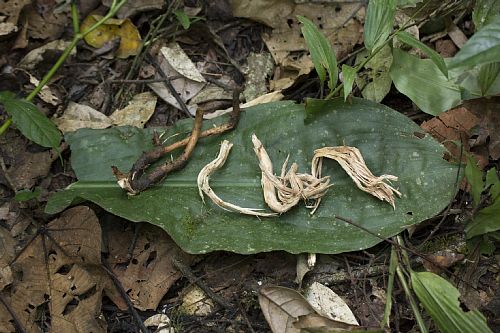
Figure 1. The wadge Pinka spat out (Photograph by Takeshi Furuichi). 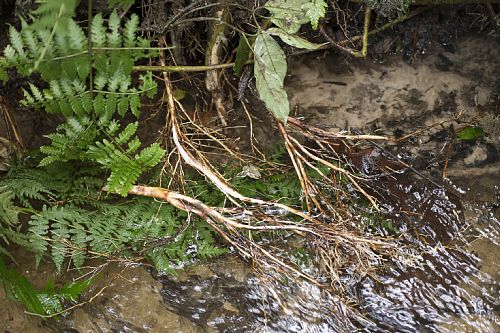
Figure 2. The tree roots sticking out from the stream bank showing the bitten-off ends (Photograph by Takeshi Fruichi). Observation 2 On Januar y 6, 2015, at 12:07, NA found Gaia (10-year-old female) sitting on a branch, eating something similar to a root. At 12:19, she finished eating it. We could not identify what she ate because she ate all of it. We did not observe her spitting any wadge out. Observation 3 On January 6, 2015, at 14:04, NA found Gale (6-yearold female) and her sister Gaia eating roots of a fallen tree at the edge of the stream. At 14:08, Gaia climbed up into a nearby tree with a part of the root. She ate it while sitting on a branch. At 14:09, Minny (adult female) approached and started eating roots of the fallen tree with Mizuki (0-year-old offspring of Minny) on her chest. Minny directly bit off a root and chewed it (Video 1: available online at mahale.main.jp/PAN/22_1/22(1)_04.html). At 14:15, Gale came back and started eating a piece of the root with Minny. At 14:29, Minny pulled out another root from the ground, by grasping a part of it that was found on the surface and ate it. At 14:31, Gale spat out a part of the root that she was chewing. At 14:37, they finished eating roots. All leaves of the tree had already fallen, but the bark was fresh. The tree was identified as Neoboutonia macrocalyx (Eupborbiaceae) from the color and texture of the bark and the smell of the wood. Although we only observed spitting out of wadge once, we found many pieces of wadge around the tree (Figure 3). 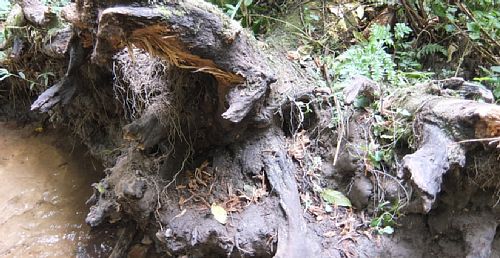
Figure 3. There were many pieces of wadge around the roots (Photograph by Natsumi Aruga). Video 1. Observation 4 On January 8, 2015, NA observed Iku (9-year-old female) and her sister Iyo (5-year-old female) eating roots. At 13:14, Iku climbed down from the tree. At 13:16, Iku climbed up the same tree with a piece of root and at 13:17, began to eat it. At 13:18, Iyo approached Iku, and she took the root from Iku. At 13:19, Iyo started to eat it. At 13:40, Iyo obtained it back from Iku and moved away. We did not observe them spitting out wadge material during this observation (Video 2: available online at mahale.main.jp/PAN/22_1/22(1)_04.html). Video 2. DISCUSSION Feeding on roots other than USOs is rare in chimpanzees. The lists of items ingested by chimpanzees at several study sites do not mention “root” as a plant part eaten by chimpanzees (Bossou: Sugiyama & Koman 1987 but see Hockings et al. 2010; Mt. Assirik: McGrew et al. 1988; Kibale: Chemurot et al. 2012), and lists from other study sites contain only few species of root items ingested (Kahuzi: 1 species, Basabose 2002; Budongo: 1 species, Fawcett 2000; Ngogo: 3 species, Watts et al. 2012; Mahale: 2 species, Itoh et al. in press). Watts et al. (2012) have reported that time spent feeding on roots was only 0.4% of total feeding time. Feeding on roots may be rare occurrence because roots are not easily obtainable by chimpanzees. In this study, chimpanzees obtained roots that were emerging from the bank of a stream or from a fallen tree. In Mahale, chimpanzees bit-off and chewed roots emerging from the ground (Nishida & Uehara 1983; Itoh & Nakamura in press). Although chimpanzees were observed eating roots that existed under the ground, they obtained the roots by pulling a portion of the roots that was found above the ground (Kalinzu: this study; Mahale: Itoh & Nakamura in press). Chimpanzees and gorillas often chew woody roots or wood pulp material without swallowing it (this study; Rothman et al. 2006; Reynolds et al. 2009; Watts et al. 2012; Itoh and Nakamura in press). Wood is characteristically highly fibrous, relatively indigestible, and poor in nutrients (Waterman 1984). Therefore, chimpanzees may chew roots because they contain micronutrients such as sodium (Budongo: Reynolds et al. 2009; Bwindi: Rothman et al. 2006). Furthermore, it is also possible that chimpanzees eat roots for medicinal purposes. Huffman (1997) has argued that live/dry wood feeding by chimpanzees is a possible form of medicinal plant use. Root eating observed in this study may also be classified as medicinal plant use by chimpanzees. In Kalinzu and Ngogo (Watts et al. 2012), chimpanzees ate woody roots of Neoboutonia macrocalyx. The stem bark of Neoboutonia macrocalyx has medicinal properties (Kirira et al. 2007; Namukobe et al. 2014). In fact, local people in Uganda use the stem bark of Neoboutonia macrocalyx to treat stomach ache and malaria (Namukobe et al. 2011). However, further investigation is required to determine the presence or absence of bioactive compounds in the roots in the same state as those being consumed by chimpanzees, and to evaluate the health status of consumers before and after consumption of root material before assuming further conclusions (Huffman 1997). Our observations provide new evidence suggesting the need to further evaluate this interesting behavior in chimpanzees. ACKNOWLEDGEMENTS We thank the National Forestry Authority of Uganda, Uganda National Council for Science and Technology for research permits. We thank the research assistants and other workers in Kalinzu for supporting us. Furthermore, we thank members of the Primate Research Institute (PRI), Kyoto University, and researchers conducting research on primates in Kalinzu for various support and encouragement. This study was financially supported by JSPS Grants-in-Aid for Scientific Research (40379011 to Hashimoto; 26257408 to Furuichi; 25257495 to Ihobe; 25257407 to Yumoto), the JSPS Asia-Africa Science Platform Program (2012–2014 to Furuichi), and the Leading Graduate Program in Primatology and Wildlife Science (to Kyoto University). REFERENCES Basabose AK 2002. Diet composition of chimpanzees inhabiting the montane forest of Kahuzi, Democratic Republic of Congo. Am J Primatol 58:1–21. Chemurot M, Isabirye-Basuta G, Sande E 2012. Amount of plant foods eaten and sexual differences in feeding among wild chimpanzees (Pan troglodytes) of Kanyawara community. ISRN Zoology, Article ID 120250. Fawcet t K A 2000. Female Relationships and Food Availability in a Forest Community of Chimpanzees. PhD Thesis, University of Edinburgh, Edinburgh. Goodall J 1986. The Chimpanzees of Gombe. Harvard University Press, Cambridge MA. Hashimoto C, Furuichi T 2006. Frequent copulations by females and high promiscuity in chimpanzees in the Kalinzu Forest, Uganda. In: Primates in Western Uganda. Newton-Fisher NE, Notman H, Paterson JD, Reynolds V (eds), Springer, New York, pp. 247–257. Hashimoto C, Tashiro Y, Furuichi T 2001. What factors affect the size of chimpanzee parties in the Kalinzu Forest, Uganda? Examination of fruit abundance and number of estrous females. Int J Primatol 22:947–959. Hernandez-Aguilar AR, Moore J, Pickering TR 2007. Savanna chimpanzees use tools to harvest the underground storage organs of plants. Proc Natl Acad Sci USA 104:19210–19213. Hockings KJ, Anderson JR, Matsuzawa T 2010. Flexible feeding on cultivated underground storage organs by rainforestdwelling chimpanzees at Bossou, West Africa. J Human Evol 58:227–233. Howard PC 1991. Nature Conservation in Uganda’s Tropical Forest Reserves. IUCN, Gland, Switzerland. Huffman MA 1997. Current evidence for self-medication in primates: a multidisciplinary perspective. Yearb Phys Anthropol 40:171–200. Itoh N, Nakamura M in press. Diet and feeding behavior. In: Mahale Chimpanzees: 50 Years of Research. Nakamura M, Hosaka K, Itoh N, Zamma K (eds), Cambridge University Press, Cambridge. Itoh N, Zamma K, Matsumoto T, Nishie H, Nakamura M in press. Appendix II Dietary list. In: Mahale Chimpanzees: 50 Years of Research. Nakamura M, Hosaka K, Itoh N, Zamma K (eds), Cambridge University Press, Cambridge. Kirira PG, Rukunga GM, Wanyonyi AW, Muthaura CN, Mungai GM 2007. Tigliane Diterpenoids from the Stem Bark of Neoboutonia macrocalyx. J Nat Prod 70:842–845. Kortlandt A, Holzhaus E 1987. New data on the use of stone tools by chimpanzees in Guinea and Liberia. Primates 28:473–496. Lanjouw A 2002. Behavioural adaptations to water scarcity in Tongo chimpanzees. In: Behavioural Diversity in Chimpanzees and Bonobos. Boesch C, Hohmann G, Marchant LF (eds), Cambridge University Press, Cambridge, pp. 52–60. McGrew WC, Baldwin PJ, Tutin CEG 1988. Diet of wild chimpanzees (Pan troglodytes verus) at Mt. Assirik, Senegal: I. Composition. Am J Primatol 16:213–226. Morgan D, Sanz C 2006. Chimpanzee feeding ecology and comparisons with sympatric gorillas in the Goualougo Triangle, Republic of Congo. In: Feeding Ecology in Apes and Other Primates: Ecological, Physical and Behavioural Aspects. Hohmann G, Robbins MM, Boesch C (eds), Cambridge University Press, Cambridge, pp. 97–122. Namukobe J, Kasenene JM, Kiremire BT, Byamukama R, Kamatenesi-Musisha M, Krief S, Dumontet V, Kabasa JD 2011. Traditional plants used for medicinal purposes by local communities around the Northern sector of Kibale National Park, Uganda. J Ethnopharmacol 136:236–245. Namukobe J, Kiremire BT, Byamukama R, Kasenene JM, Akala HM, Kamau E, Dumontet V 2014. Antiplasmodial compounds from the stem bark of Neoboutonia macrocalyx pax. J Ethnopharmacol 162:317–322. Newton-Fisher NE 1999. The diet of chimpanzees in the Budongo Forest Reserve, Uganda. Afr J Ecol 37:344–354. Nishida T, Uehara S 1983. Natural diet of chimpanzees (Pan troglodytes): Long-term record from the Mahale Mountains, Tanzania. Afr Stud Monogr 3:109–130. Reynolds V, Lloyd AW, Babweteera F, English CJ 2009. Decaying Raphia farinifera palm trees provide a source of sodium for wild chimpanzees in the Budongo Forest Uganda. PloS one 4:e6194. Rothman JM, Soest PJV, Pell AN 2006. Decaying wood is a sodium source for mountain gorillas. Biol Lett 2:321–324. Sugiyama Y, Koman J 1987. A preliminary list of chimpanzees’ alimentation at Bossou, Guinea. Primates 28:199–147. Waterman PG 1984. Food acquisition and processing as a function of plant chemistry. In: Food Acquisition and Processing in Primates. Chivers DJ, Wood BA, Bilsborough A (eds), Plenum Press, New York, pp. 177–211. Watts DP, Potts KB, Lwanga JS, Mitani JC 2012. Diet of Chimpanzees (Pan troglodytes schweinfurthii) at Ngogo, Kibale National Park, Uganda, 1. Diet composition and diversity. Am J Primatol 74:114–129. Wrangham RW 1977. Feeding behaviour of chimpanzees in Gombe National Park, Tanzania. In: Primate Ecology: Studies of Feeding and Ranging Behaviour in Lemurs, Monkeys and Apes. Clutton-Brock TH (ed), London Academic Press, London, pp. 504–538. Back to Contents |